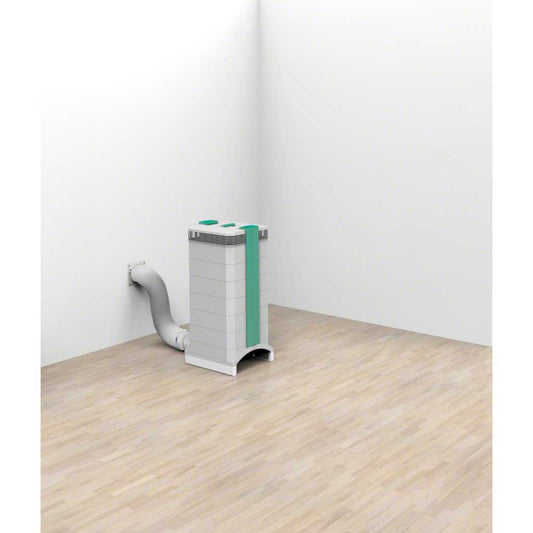
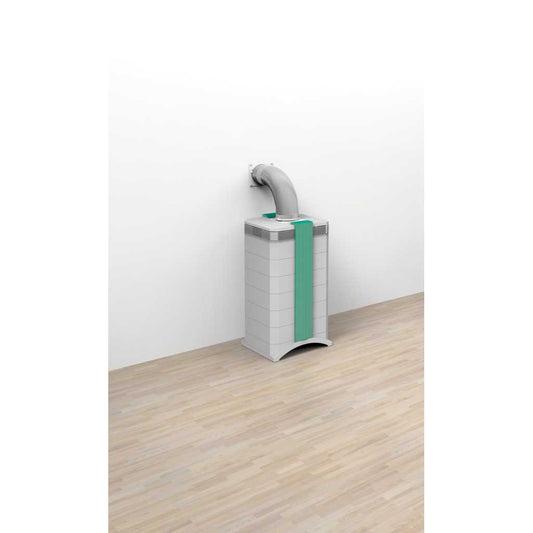
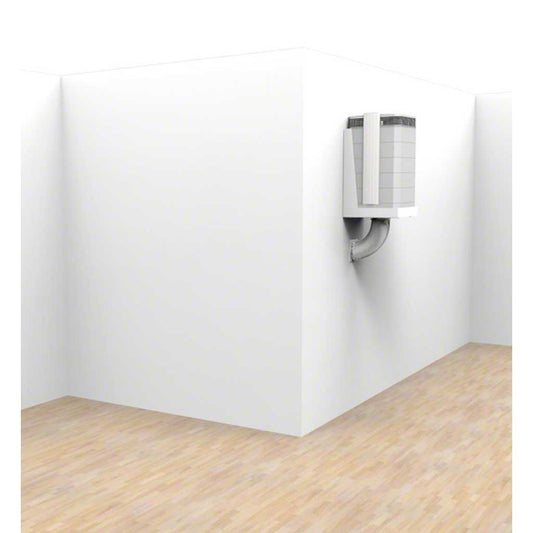
Air pressure in a given room under positive pressure is higher than outside, so contaminants (particles, viruses, bacteria, gases, etc.) are kept out. The pressure differential should be at least 2.5 Pa and ideally should be 8 Pa. These positive pressure isolation rooms are also often known as protective rooms.
With our high-performance hospital air filtration units and accessories, a flexible installation of both negative and positive pressure environments can be created in the most cost-efficient way. These negative and positive pressure systems can also be quickly moved from one patient location to another as needs change.
Setting up a positive or negative pressure isolation environment is an effective way of creating an isolation room and has many applications in healthcare and in industries like microelectronics – in fact, in any situation where cleanliness is a priority.
In a positive or negative pressure isolation room, air flow is controlled so it always flows from less to more contaminated areas. Control is achieved by adjusting the pressure differential between supply and exhaust air.
Positive Pressure Environment
Air pressure in the room under positive pressure is higher than outside, so contaminants (particles, viruses, bacteria) are kept out. This is done by ensuring that the exhaust air is run 10-15 per cent lower than the supply air. The pressure differential is more than 2.5 Pa and ideally should be 8 Pa. The positive pressure environment is used to protect patients in operating theatres so that infection does not enter open body cavities and to protect patients with HIV infection, or other conditions linked to a compromised immune system, being nursed in isolation rooms.
Positive pressure rooms are also important in medical research where the particulate count in the environment has to be extremely low in order to preserve the integrity of the testing process. A positive pressure isolation room is also often known as a protective room.